I recently returned from a four day trip to California to attend Y Combinator’s Startup School ’09 and to explore the Silicon Valley area. I had a great time and its definitely something I would recommend to anyone interested in pursing a startup.
Some highlights:
On the connecting flight from Vegas to San Francisco I was inclined to think that every 20-something guy on the plane was also headed to Startup School. I was a bit disappointed to discover that the geeky Asian guy sitting next to me was not also a startup groupie.
Northern California is quite something from the air:

After my flight got in I headed over to the YC office in Palo Alto. I got to meet Paul Graham, a few YC alumni, and a few dozen aspiring founders who, like me, hope one day to earn that opportunity. A few people recognized my name from this blog and my work with Domain Pigeon, which was kinda cool.
One thing that was really amazing was the robot they had in the back, which Trevor and his team were showing off:

The next day were the Startup School talks. Chris, a Rails developer I met through Philly on Rails meetups, attended with me. I won’t go into much detail about the talks, as they have been written about pretty extensively, but I thought they were all very well done. I liked Jason Fried’s a lot. His style and adherence to his principles are inspiring.
Afterward, Chris and I bounced around three of the post-Startup School meetups: the one immediately after a law firm in Berkeley and later, Dropbox and AirBNB in San Francisco.
Dropbox was awesome. I kept thinking, “This is how a startup should be.” Their office, located in downtown San Francisco, was a hacker paradise. Two to four 27″ monitors per desk, comfy Aeron chairs, a room-size dry erase board with scattered calculations, and, of course, Rock Band and a ping pong table. What more could you need?
The AirBNB guys and gals put on a great party too–the air crew outfits were a nice touch.
The next day (Sunday) Chris and I wandered around northern San Francisco. We started off walking, and later wound up biking around Fisherman’s Wharf. We biked over the Golden Gate bridge, through Sausalito, around to Tiburon, and took a ferry back. San Francisco is such a beautiful area, especially compared to New Jersey. The air is cool, the sky golden, and best of all, people know what a startup is. None of this “So you want to make websites?” business I hear over here.
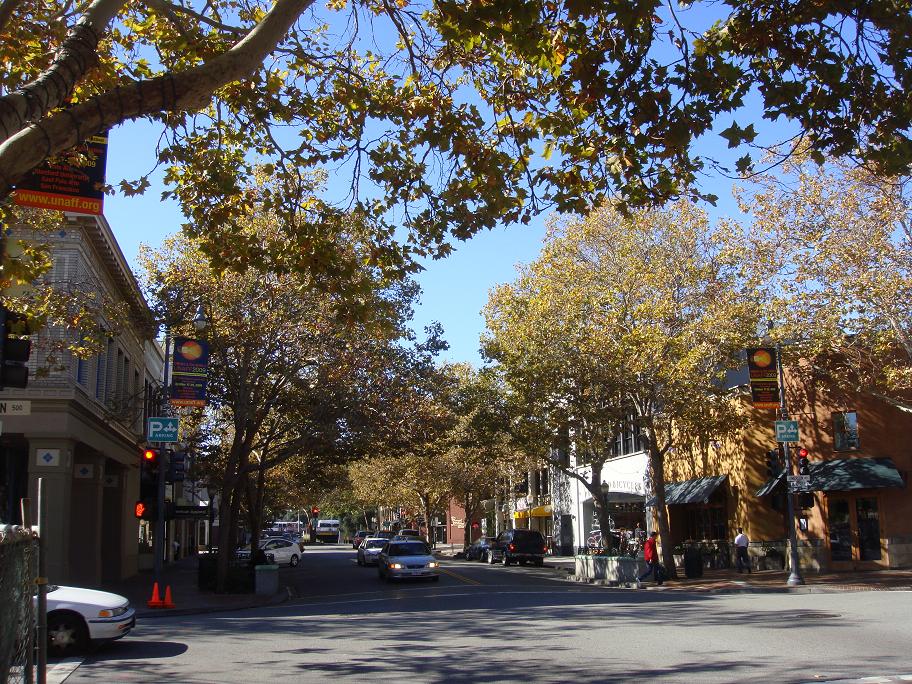
On Monday, I spent the day sightseeing around the Silicon Valley area. I asked for advice on HackerNews as far as what to check out and wound up following most of the suggestions, with the exception of the Computer Museum, which sounded too intense for me. I started out with brunch at the Coupa Cafe in Palo Alto, and then walked around Stanford for an hour or two. Palo Alto is a beautiful area:
And Coupa did not disappoint. I enjoyed a delicious breakfast crepe while trying to make out what everyone else was working on. I overheard an older well dressed guy, presumably a VC, mention Ron Conway in a conversation with a a young, jeans-and-tshirt startup guy. It was kind of funny because that’s exactly what people said it would be like.
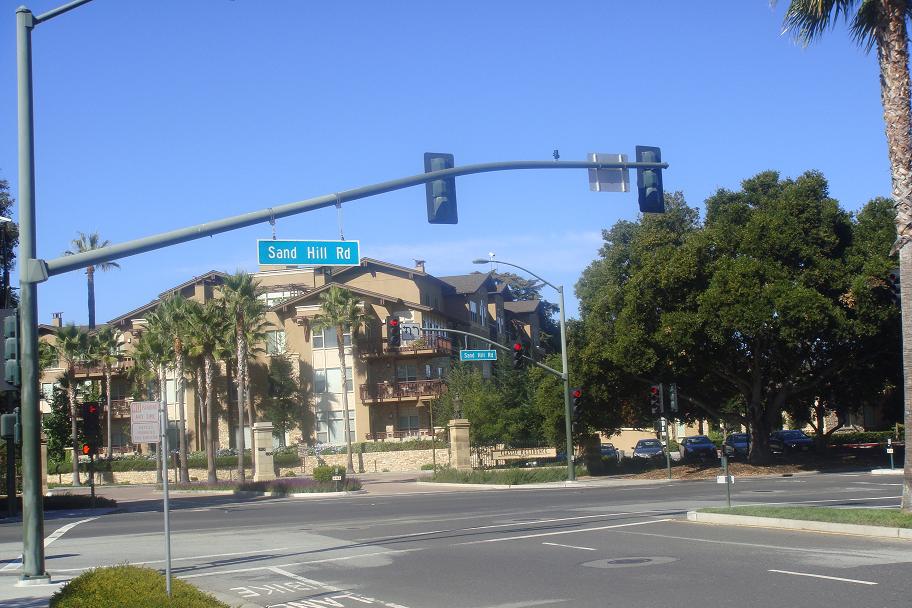
Speaking of VCs, I eventually found myself on Sand Hill Road of Silcon Valley fame. I took a picture of the street sign and sent it to my wife, who replied with something about how I was lucky to have a wife because I’m such a major geek. She’s so sweet.
Tired of walking, I drove up Page Mill Road to Skyline blvd, which offers an amazing view of the valley.
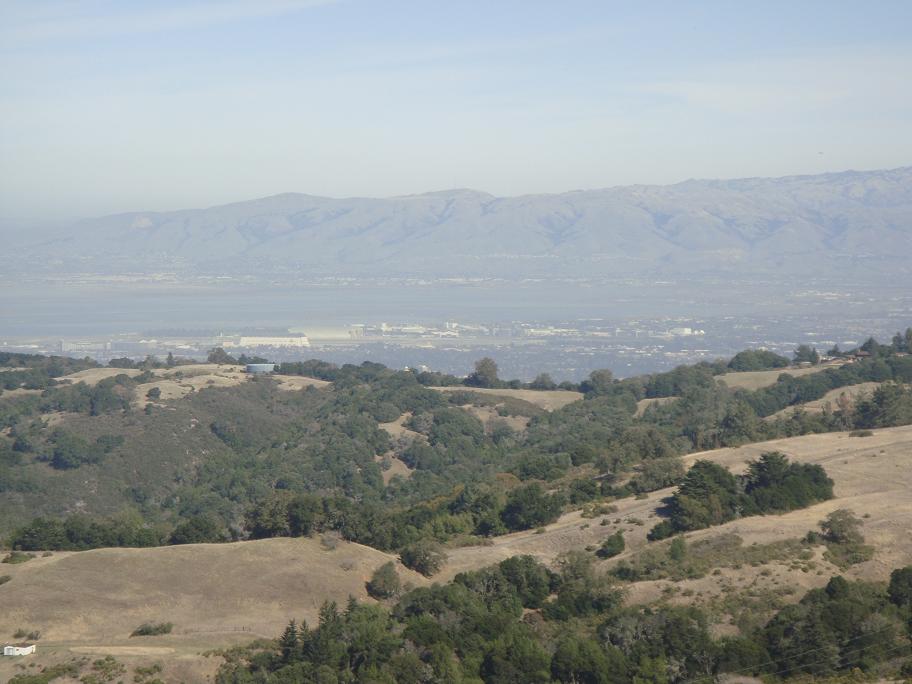
At the main scenic overlook I met a shirtless electrical engineer named Mike whose startup recently went busto. It was a much-needed reminder not to forget about the inherent survivorship bias of the Startup School speakers. Most were there because at least one of their companies had done spectacularly well; you don’t hear much from many startups like Mike’s who quietly fail. Anyway…
The rest of the day consisted of Google (not even a keychain?), Fry’s (wow), and In & Out Burger, which lived up to its name.

I flew back to Jersey on Tuesday. It was raining when I arrived, and had been for several days.
###
One thing that people kept asking me during the trip was “Working on anything right now?” to which I had to answer “Not at the moment, I’m between projects” which sounded OK until I heard someone else say it, and then I realized it was pretty lame.
I also had an epiphany of sorts. I had planned on doing my next project in Django. Domain Pigeon was a Rails project and I figured as long as I’ve got time, I might as well learn a new framework with each new web app. What I realized is that the language and framework don’t matter as much as identifying something people want and executing on that idea. Meaning, if I eventually succeed as a startup founder, its not going to be because I used Rails or Django or whatever. It’s going to be because I create something amazing. And what I’ve come to realize is that that’s what I should focus on, not on learning a new framework. Customers don’t care about your framework; they care about the product. And so I ought to be building and launching sites because ultimately that’s what’s going to matter in the end, not the framework that powers it.
With that in mind, I started working on a new project on the flight back from Startup School.
And I’m really excited.
Startup School was a blast.

Some highlights:

On the connecting flight from Vegas to San Francisco I thought was inclined to think that every 20-something guy on the plane was also headed to Startup School. I was a bit disappointed to learn that the geeky Asian guy who sat down next to me was not also a startup groupie.

The get-together at YC on Friday night one of the best part of the trip. I got to meet Paul Graham, a lot of YC alumni, and a lot of aspiring founders who, like me, hope one day to earn that opportunity. A few people recognized my name from this blog and my work with Domain Pigeon, which was cool.

Chris, a Rails developer I met through the Philly on Rails meetups, attended with me. I won't go into much detail about the talks, as they have been written about pretty extensively, but I thought they were all good presentations. I liked Jason Freid's a lot. His nonconformity and adherence to his principles are inspiring.

Afterwards Chris and I bounced around three of the post-Startup School meetups: the one immediately after XX Law Firm in Berkeley and later, Dropbox and AirBNB in San Francisco.

Dropbox was awesome. I kept thinking, "This is how a startup should be." Their office, located in downtown San Francisco, was a hacker paradise. Two to four 27" monitors per desk, comfy Aeron chairs, room-size dry erase boards with scattered calculations, and, of course, Rock Band and a ping pong table.

Chris and I spent in Sunday in SF, first walking and later biking around Fisherman's Wharf. We eventually biked over the Golden Gate bridge, through Sausalito, around to Tiberon, and took a ferry back. SF is such a beautiful area, especially compared to New Jersey. The air is cool, the sky golden, the people liberal, and, best of all, and people don't look at you funny if you say you want to work on a startup.

On Monday I travelled around the Silcon Valley area. I asked for advice on HackerNews as far as what to check out, and wound up following most of the suggestions. I started out with brunch at the Cuepa Cafe in Palo Alto, and then walked around Stanford for an hour or two. Cuepa did not disappoint. I enjoyed a delicious breakfast crepe while trying to make out what everyone else was working on. I overheard an older well dressed guy, presumably a VC, invoke "Ron Conway" in a conversation with a a young guy in jeans and a t-shirt. It was kind of funny because that's exactly what people said it was like.

Speaking of VCs, I eventually found myself on Sand Hill Road of Silcon Valley fame, which was neat. Tired of walking, I drove up Page Mill Road to Skyline drive, which offers an amazing view of the valley. At the main scenic overlook I met a shirtless electrical engineer named Mike whose startup recently collapsed. It was a much-needed reminder not to forget about the survivorship bias of the Startup School crowd. Most were there because at least one of their companies had done spectacularly well; you don't hear as much from the ones that fail or achieve mediocre success.

Next, I then headed over to Google, but, alas, there isn't a gift shop or welcome center or anything like that to browse around. I couldn't even get a keychain =/. Finally, I stopped by Fry's, which was easily the largest electronic store I've ever seen.

Tuesday I headed back to New Jersey.

It was raining when I got in, and had been for several days.

###

One thing I kept getting asked during the trip was "What are you working on right now?" to which I had to answer "Nothing, I'm between projects" which sounded OK until I heard someone else say it, and then I realized it was pretty lame.

I also had an epiphany of sorts. I had planned on doing my next project in Django. Domain Pigeon was a Rails project and I figured as long as I've got time, I might as well learn a new framework with each new web app. What I realized is that the language and framework don't matter as much as making something people want and executing on that idea. Meaning, if I succeed as a startup founder, its not going to be because I used Rails or Django or whatever. It's going to be because I create something amazing. And what I've come to realize is that that's what I should focus on, not on learning a new framework. My point is that I ought to focus on building and launching sites because ultimately that's what's going to matter in the end, not framework I use.

With that in mind, I wrote the first line of code for my new project on the flight back from Startup School. I'm excited.



 Matt Mazur